

Hibiscus for Hair: Flower, Powder and How to Use It
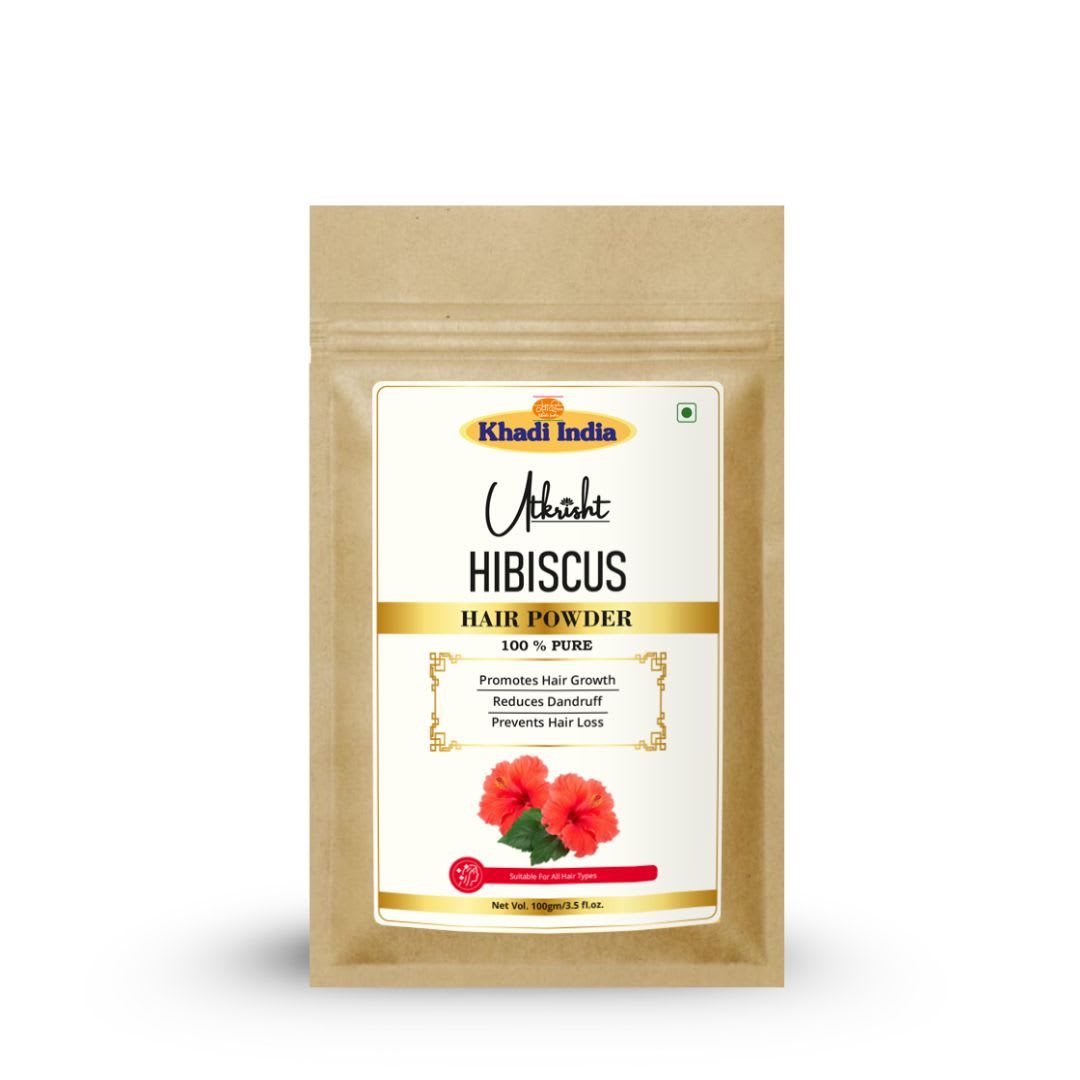
The red hibiscus flower, called gudhal in Hindi, grows in many Indian gardens. Its petals and leaves have long been used in hair care for softness and slip.
Forms
- Dried hibiscus flowers for rinses and infusions.
- Hibiscus hair powder for masks.
A simple hibiscus mask
- Mix 2 spoons of hibiscus powder with curd.
- Add a spoon of oil for dry hair.
- Apply to the lengths, leave 20 minutes and rinse well.
A hibiscus rinse
Steep dried flowers in hot water, cool, strain and pour over washed hair as a last rinse.
Notes
Patch-test first. Hibiscus can slightly tint pale hair. More recipes in our hair powders guide.
Why hibiscus is loved in hair care
Hibiscus petals and leaves contain a natural mucilage, a slippery substance that makes a mask feel smooth and conditioning. That is why hibiscus has traditionally been used for softness and easy combing.
- A hibiscus mask feels slippery and cool.
- The colour is mild and washes out easily.
- Pair it with curd for extra softness.
- Use it after a gentle shampoo, not before.
Tips
Make your mask thick enough to stay on hair. Apply with a brush or fingers, cover your hair with a shower cap and rinse well.
Frequently asked questions
Can I use fresh hibiscus flowers?
Yes, if they are clean and pesticide-free. Dried flowers are easier to store.
Will hibiscus stain my towel?
It can leave a mild tint, so use an old towel.
How often should I use a hibiscus mask?
Once a week or less is enough.
Quick takeaway
Hibiscus is a gentle conditioning herb. Use a mask or rinse once a week and patch-test.
This article is general information about traditional Ayurvedic hair, skin and bath care. It is not medical advice. If you have sudden or patchy hair loss, a sore, itchy or flaky scalp, or skin that is painful, swollen or not improving, please see a doctor or dermatologist. Always patch-test a new product first.